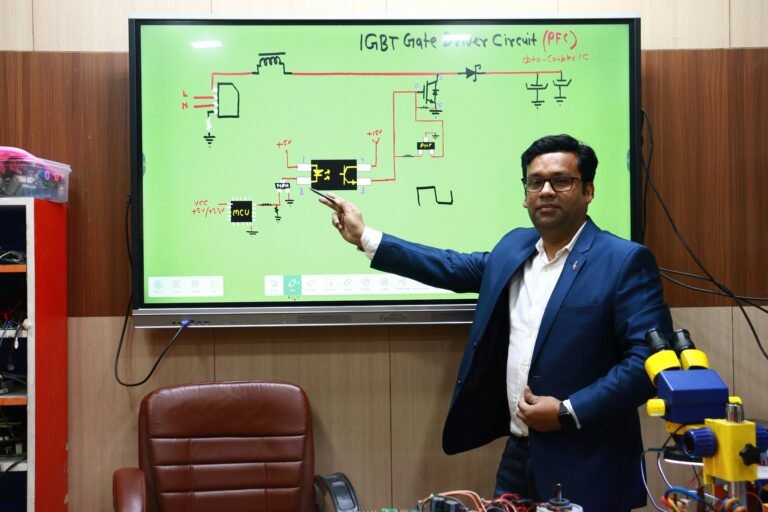
Engineering courses, particularly the popular B.Tech (Bachelor of Technology), provide a strong foundation in technical skills and problem-solving. They typically last 4 years and cover core sciences alongside specialized branches like Computer Science, Mechanical, or Civil Engineering. Engineering remains one of the most in-demand career options. We guide students to choose the right specialization and university based on future job trends.
Core Structure
Programs start with foundational subjects in the first year, including Mathematics, Physics, Chemistry, Basic Electrical Engineering, and Programming (often C or Python). From the second year, students shift to branch-specific topics, with labs, projects, and internships building practical skills. Electives, workshops, and a major final-year project round out the curriculum.
Eligibility:
12th with Physics, Chemistry, Mathematics
Duration:
4 Years
Career Opportunities:
Engineer | Software Developer | Project Manager | Researcher
Why Dmax?
Guidance on trending specializations
Admission & visa support
Scholarship assistance
Popular Branches
Computer Science Engineering: Focuses on Data Structures, Algorithms, Operating Systems, Databases, AI, and Networks.
Mechanical Engineering: Covers Thermodynamics, Fluid Mechanics, Machine Design, and Manufacturing.
Civil Engineering: Includes Structural Analysis, Geotechnical Engineering, and Transportation.
Electrical Engineering: Emphasizes Circuit Theory, Power Systems, Control Systems, and Electronics.
| Semester | Key Subjects |
|---|---|
| 1-2 | Math I/II, Physics I/II, Chemistry, Engineering Mechanics, Programming |
| 3-4 | Discipline cores (e.g., Data Structures for CSE, Thermodynamics for Mech) |
| 5-6 | Advanced topics (e.g., OS, Networks; Machine Design; Power Systems) + Electives |
| 7-8 | Projects, Seminars, Professional Ethics, Entrepreneurship |